A capacidade que assina a casa
Um design.
O exemplar de cada convidado.
Most stationers hand you one beautiful file and leave the names to you. We hand you one beautiful file per guest — each addressed personally, greeted in their own language, carrying their own table and their own scannable code. You design once. Your portal does it three hundred times.
A plataforma · Personalização por convidado
01
O que muda de verdade.
Sem
Um cartão, impresso 180 vezes.
“Dear Guest.” The same sheet for everyone. Names handwritten at the kitchen table the week before, or left off entirely. Seating on a board by the door, and a queue in front of it.
Com a Evorrah
Um design, impresso de 180 maneiras diferentes.
Every card carries that guest's name, their greeting in their language, their table, and a code that opens their own page. The names come from the list you already keep. Print-quality files are large, so a run this size comes back as numbered zip files rather than one — how many depends on how heavy the artwork is.
02
Como acontece.
Três passos, e você nunca vê um template nem um campo de mesclagem.
Você adiciona seus convidados
Type them in, paste a list, or import a spreadsheet. Group them by household so families stay together. Each person can carry their own language, address and table.
Marcamos o design
Once you have approved your invitation, your designer marks where the name, the greeting, the table and the code belong. It happens on our side — you never touch a template.
Você aperta gerar
One press. Every guest's file comes back ready to print, with a list matching each file to the person it belongs to, and printing notes for your print shop. A long guest list arrives as more than one numbered zip file.
03
Como fica em cada ocasião.
Weddings
Households are invited together on one card and one link — and each person still gets their own place card and their own seat. Relatives abroad are greeted in their own language on the same design as everyone else.
Wedding invitations →Galas & fundraisers
Named invitations, named event badges, and a scan at the door that checks each guest in against the list. Tables fill in as replies arrive, so the chart is never out of date.
Gala invitations →Corporate
Launches, openings and partner dinners where the invitation carries the person's name rather than their company's. Guests are grouped by relationship, so who was invited — and who came — is answerable afterwards.
Corporate events →Multi-event
Welcome dinner, ceremony, brunch. Groups decide who receives which piece, so guests attending the smaller evening get the card for it and nobody else is told about a party they are not going to.
Guest groups →05
The pieces that carry one guest's name.
A place card is the clearest case of per-guest work: there is no generic version of it. Each of these was set with a single guest's name, from the list, in the commission's own typeface — not typed by hand afterwards.
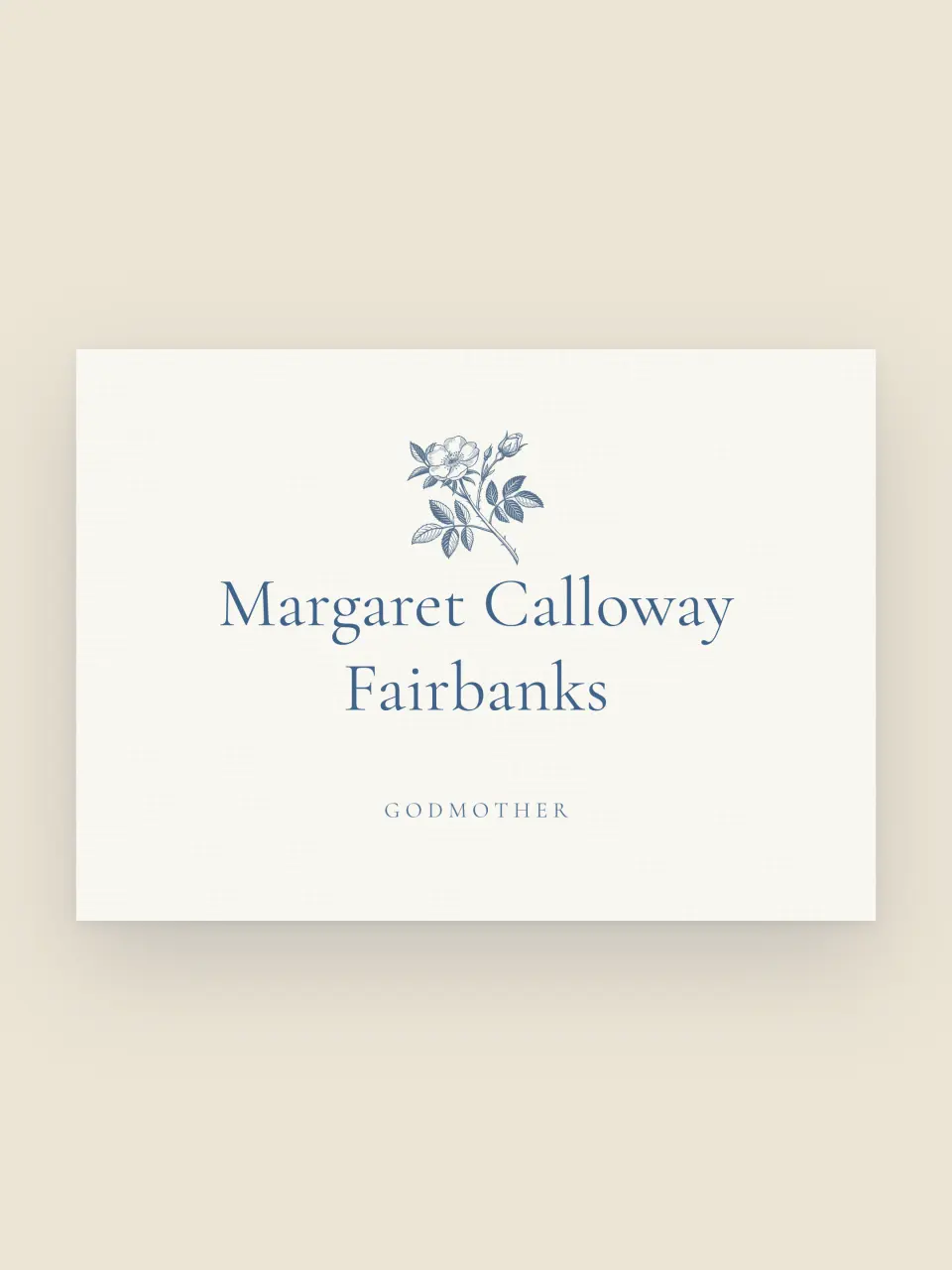
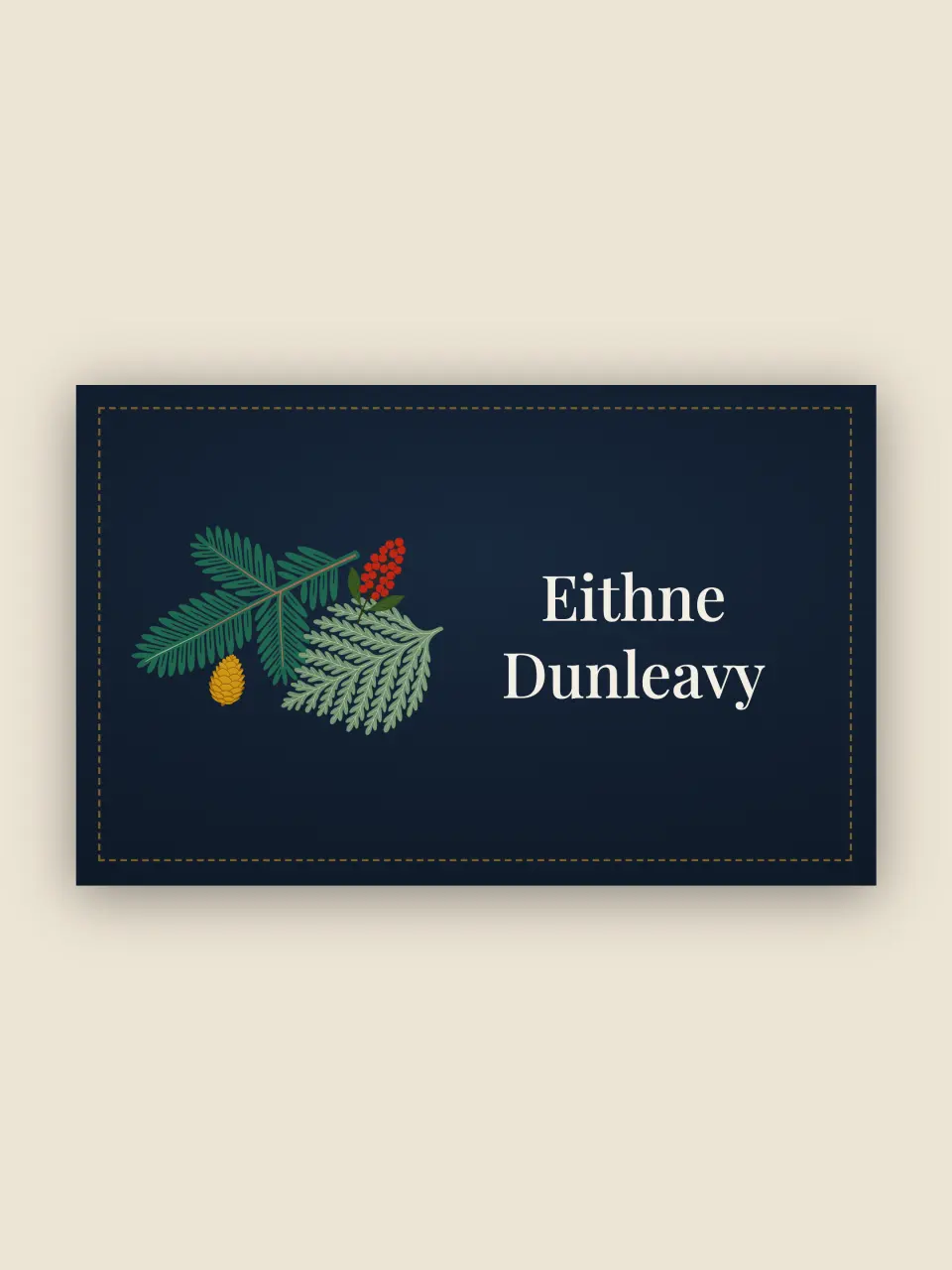
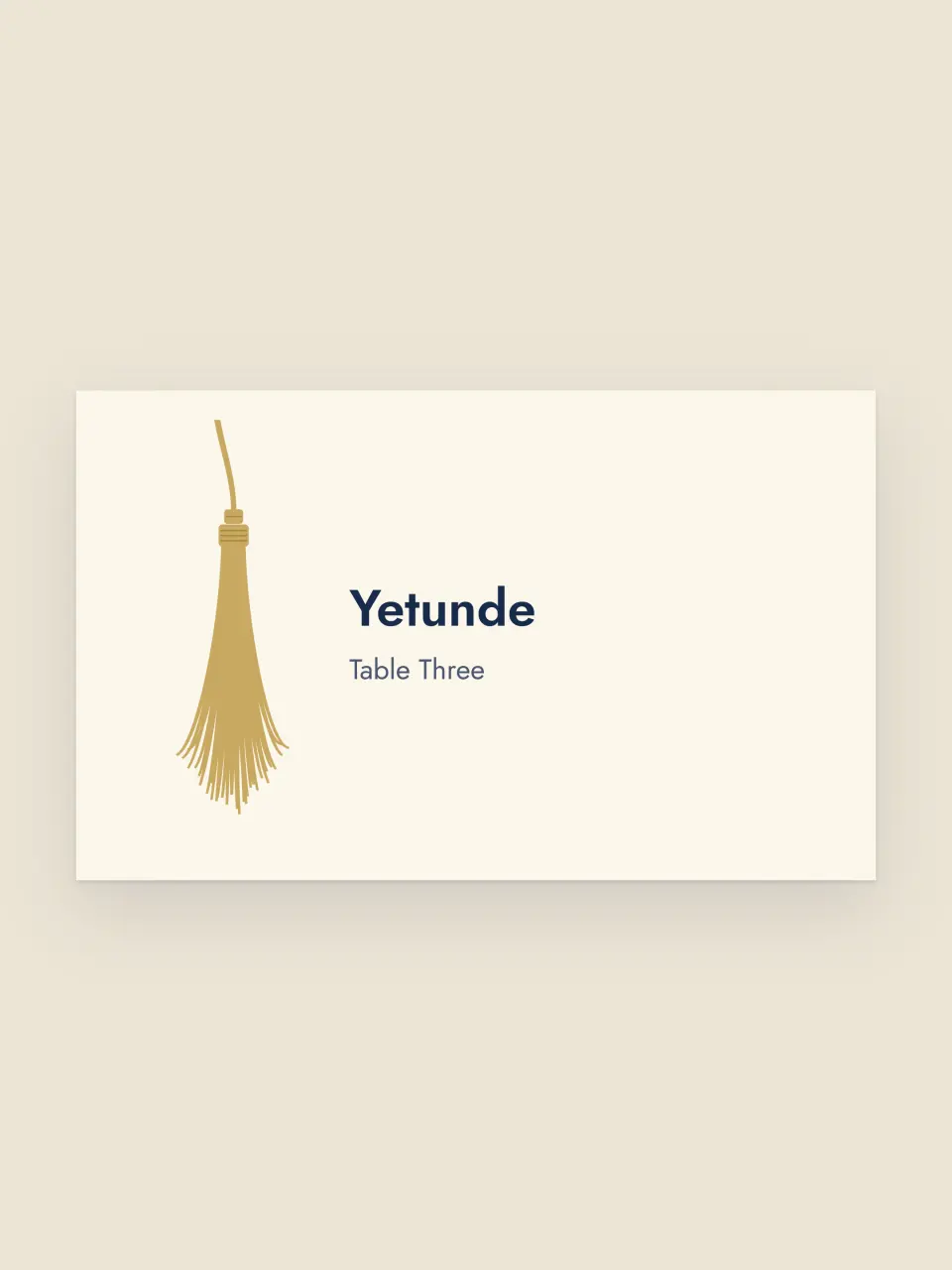
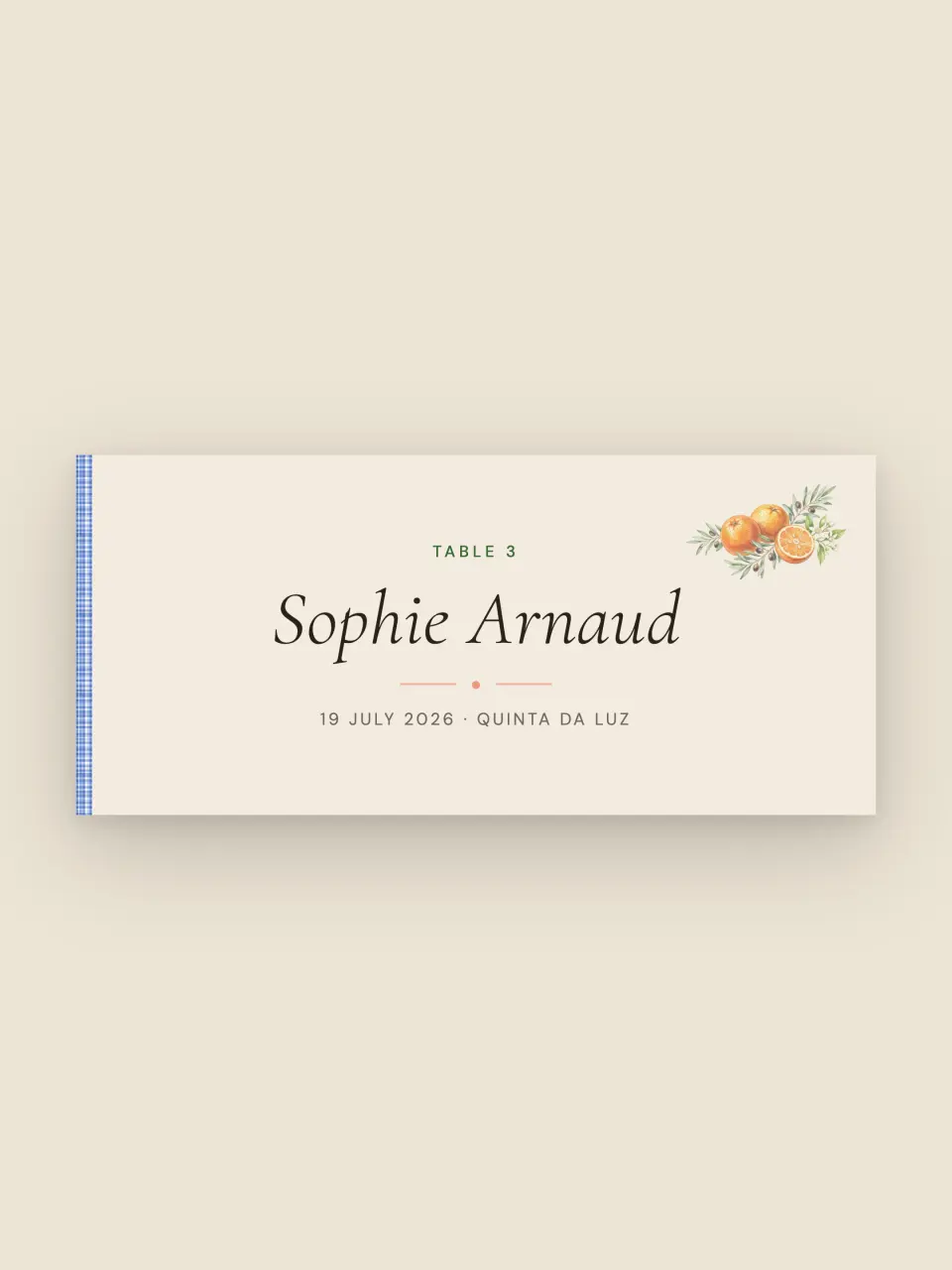
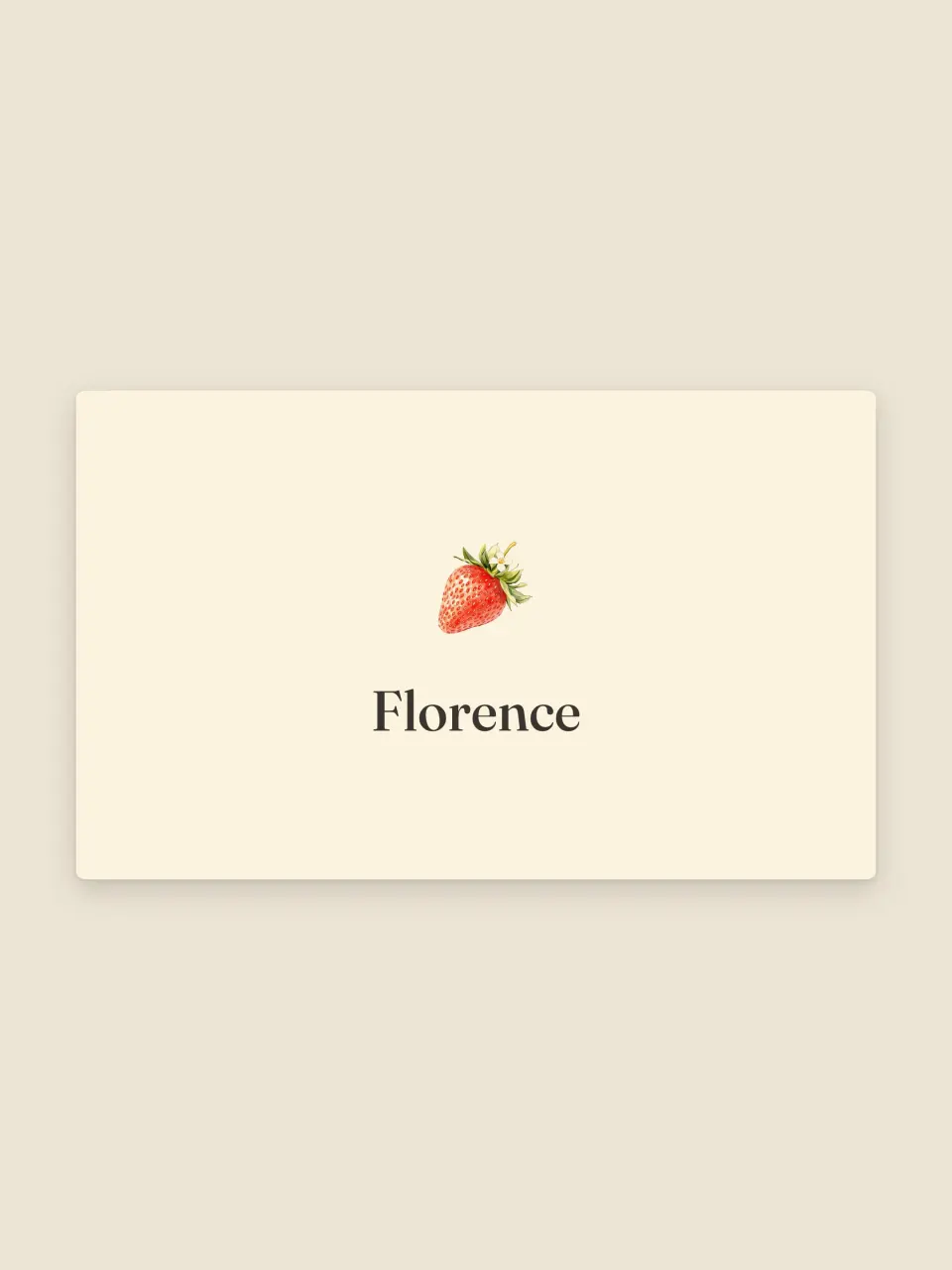
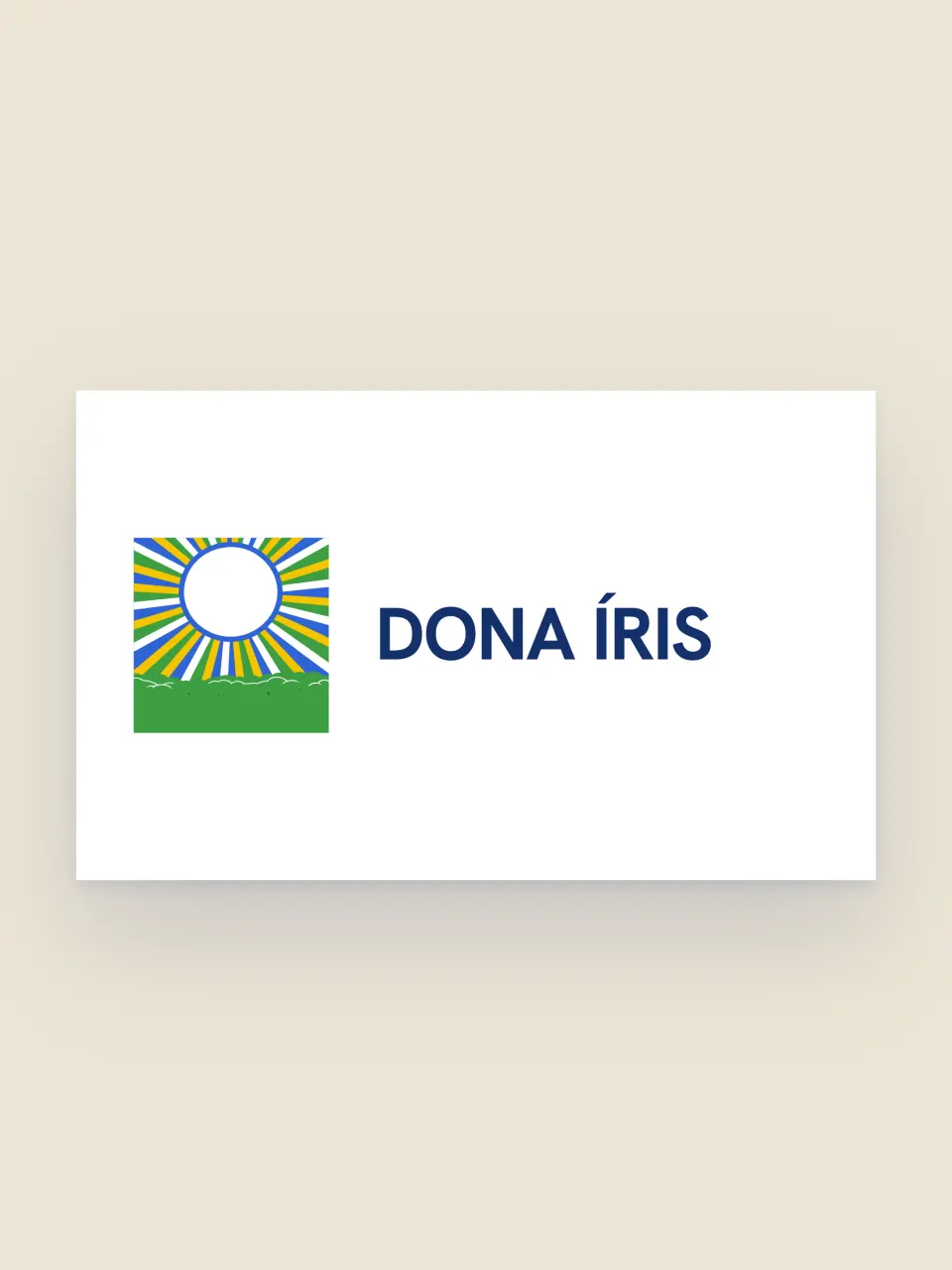
Place cards from delivered commissions — one guest's name each, set from the list
The week you get back. Personalising 180 invitations by hand means opening the file 180 times, changing one line, and exporting again. At a minute each — optimistic, with no mistakes — that is three hours for the invitation alone, and again for envelopes, and again for place cards.
What your guest actually feels. A card that opens with their own name, in their own language, is read differently from one addressed to “Guest”. They scan the code and find their evening already arranged — their table, their reply, their questions answered — without a spreadsheet, a group chat, or a sign by the door.
04
O design original.
Every personalised copy is this file with four things swapped. The design does not degrade because it was never a template to begin with.
A delivered invitation · the piece each guest's own copy is generated from
Desenhe uma vez.
Envie pessoalmente.
Part of the guest platform — included with every plan.