
The platform · 02
One design. Every guest’s own copy.
Most stationers hand you one beautiful file and leave the names to you. We hand you one beautiful file per guest — each addressed personally, greeted by name, carrying their own table and their own scannable code.
What actually changes.
Without
One card, printed 180 times. “Dear Guest.” The same sheet for everyone. Names handwritten at the kitchen table the week before, or left off entirely. Seating on a board by the door, and a queue in front of it.
With Evorrah
One design, printed 180 different ways. Every card carries that guest’s name, their own greeting, their table, and a code that opens their own page. The names come from the list you already keep.
How it happens.
Three steps, and you never see a template or a merge field.
You add your guests
Type them in, paste a list, or import a spreadsheet. Group them by household so families stay together. Each person can carry their own address, dietary note and table.
We mark the design
Once you have approved your invitation, your designer marks where the name, the greeting, the table and the code belong. It happens on our side — you never touch a template.
You press generate
One press. Every guest’s file comes back ready to print, with a list matching each file to the person it belongs to, and printing notes for your print shop. A long guest list arrives as more than one numbered zip file.
The pieces that carry one guest’s name.
A place card is the clearest case of per-guest work: there is no generic version of it. Each of these was set with a single guest’s name, from the list, in the event’s own typeface — not typed by hand afterwards.
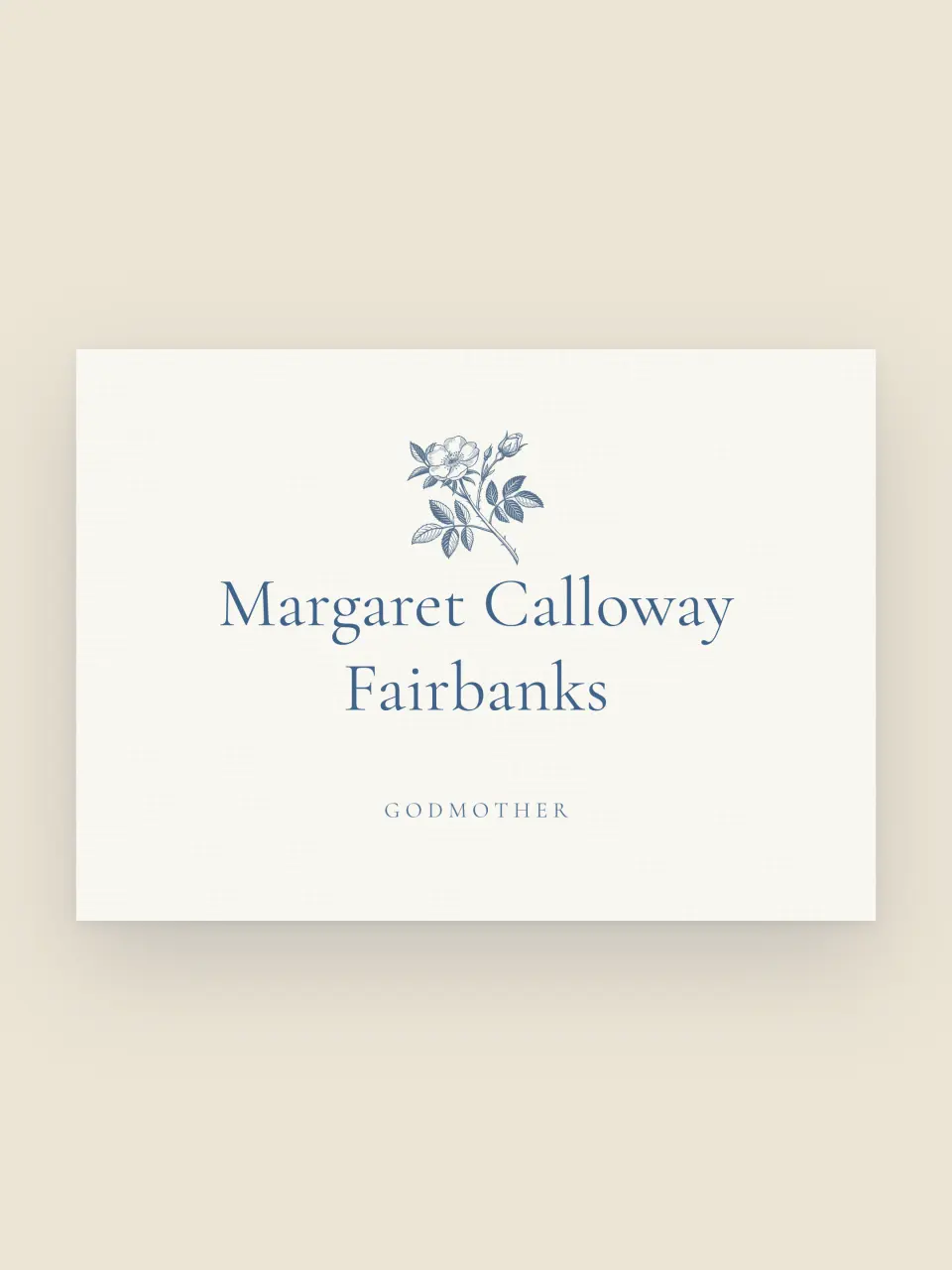
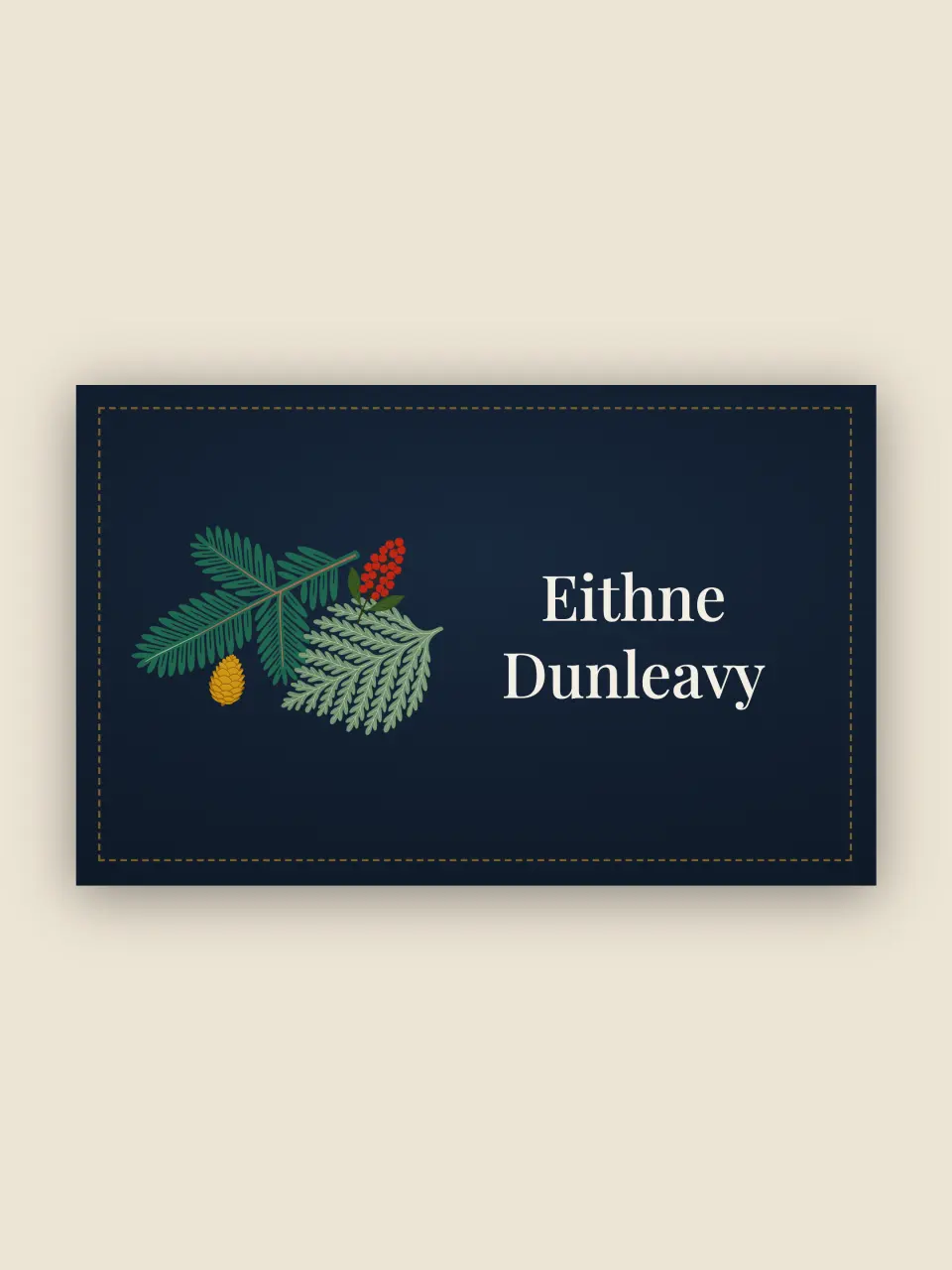
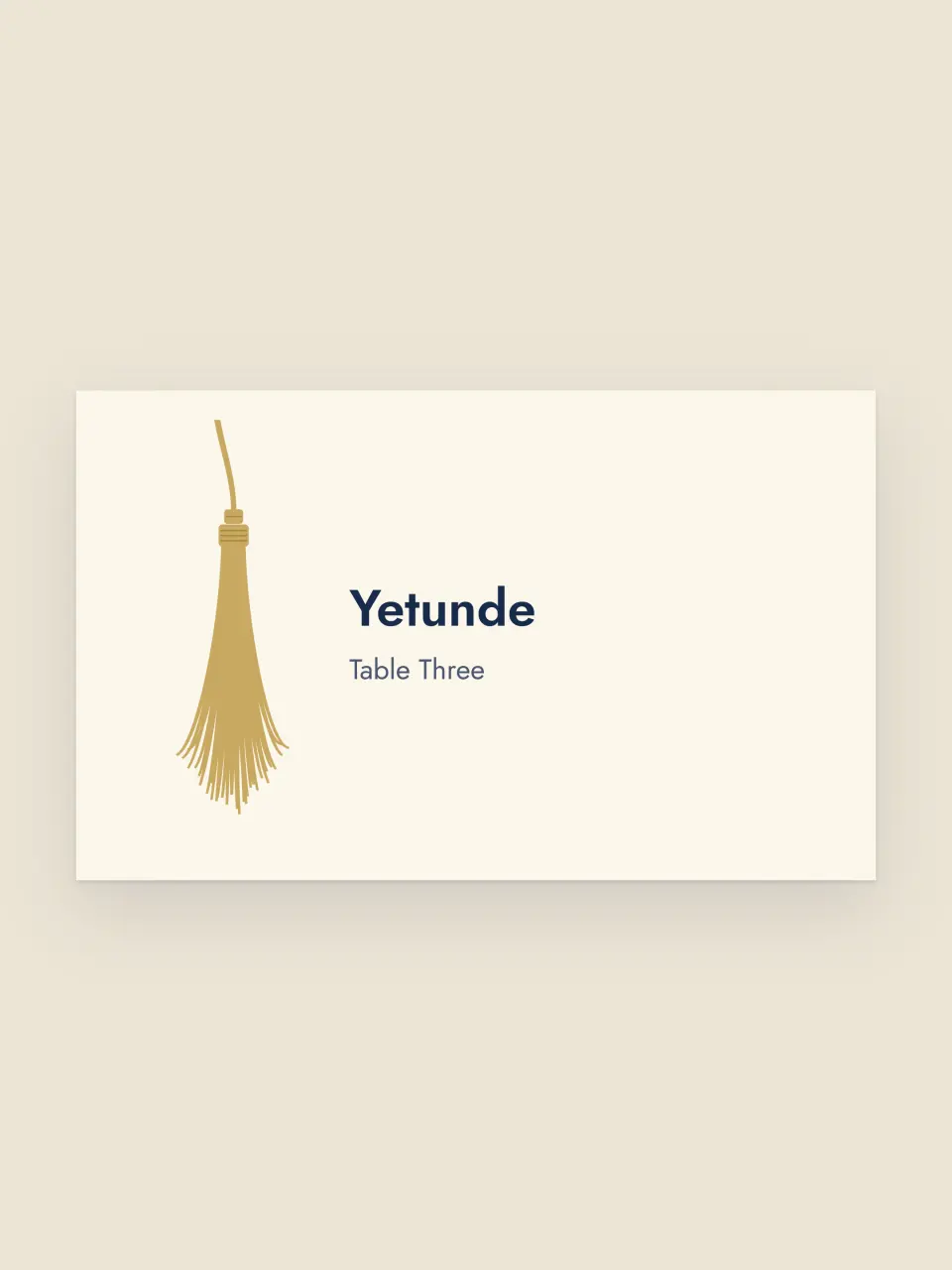
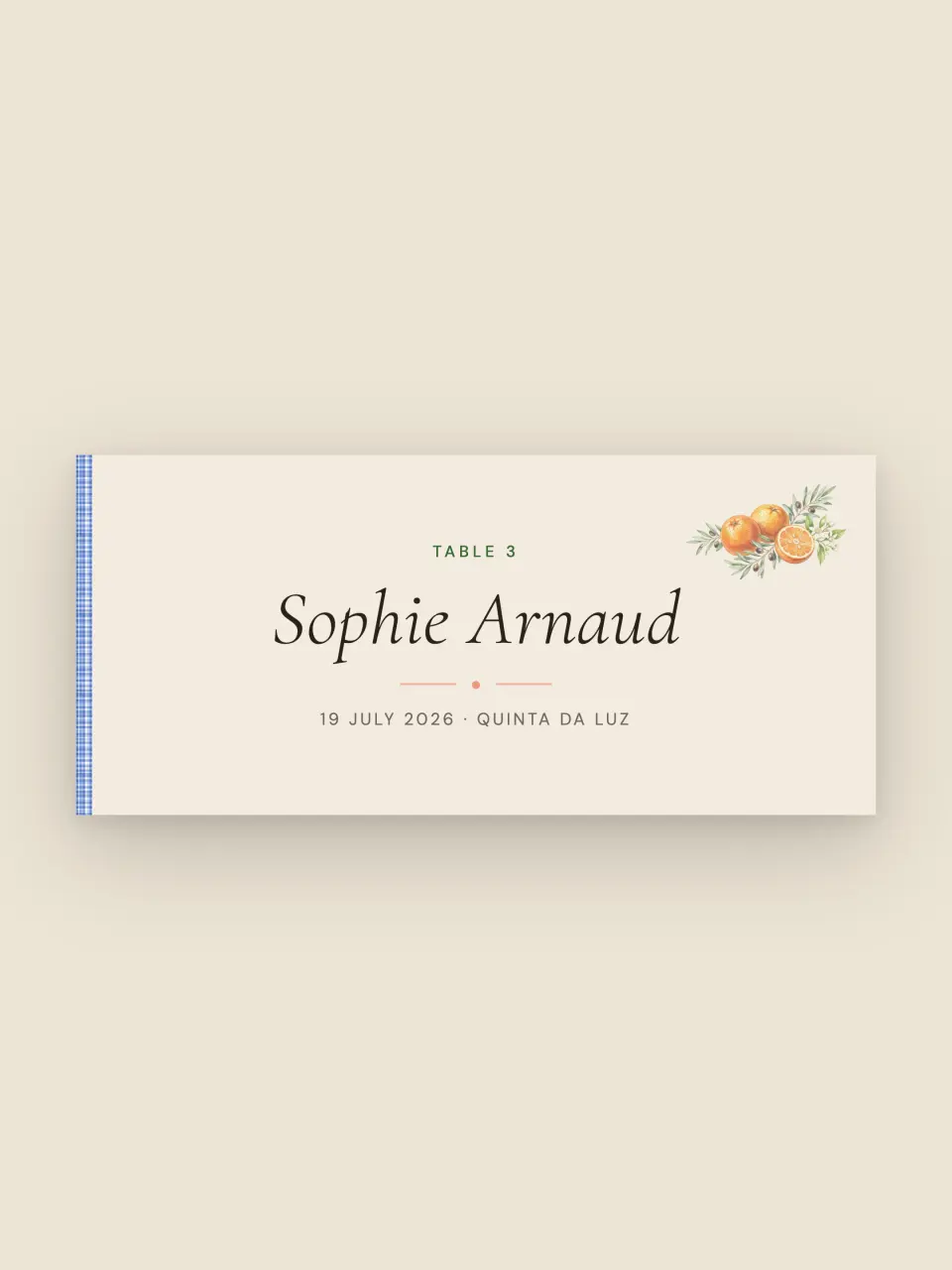

Place cards from delivered events — one guest’s name each, set from the list
What it is actually worth.
The week you get back.
Personalizing 180 invitations by hand means opening the file 180 times, changing one line, and exporting again. At a minute each — optimistic, with no mistakes — that is three hours for the invitation alone, and again for the envelopes, and again for the place cards.
What your guest actually feels.
A card that opens with their own name is read differently from one addressed to “Guest”. They scan the code and find their evening already arranged — their table, their reply, their questions answered — without a spreadsheet, a group chat, or a sign by the door.
As delivered.
The invitation as one guest received it, on four delivered events — their name, their greeting, their code.
Rendered from the file each event ran as — its own guests, dates and colour. Open any one to see it full size.
What it will not do.
Personalization is only a courtesy if it cannot embarrass you. These are standing rules, not settings.
- Generate a file for a name you have not seen on the list
- Give two guests the same code
- Pour your design into a template — the marks are placed on the artwork you approved
- Regenerate the whole set when one guest changes — only the affected files are remade
- Address a household as strangers
The names come from the list you already keep. The design is the one you already approved. Nothing is retyped between them.
The rest of the platform
Three more services,
reading from the same event.
RSVPs & Replies
One private reply link per guest, and one live count that everything else reads.
Explore → 04Guest Messages
The right message to the right guests, read by you exactly as they will receive it, then sent.
Explore → 05Event Website
A private site carrying your approved invitation, in its colour and its lettering: the schedule, the locations, the answers, the RSVP.
Explore →