Evorrah's Blog · Weddings · Real Event
Real Event: One Wedding, Brief to Delivered Suite
A nine-piece wedding suite for 165 at a Texas ranch — the brief, the two worlds, the one that was chosen, and every piece that came out of it.
A nine-piece wedding suite for 165 at a Texas ranch — the brief, the two worlds, the one that was chosen, and every piece that came out of it.
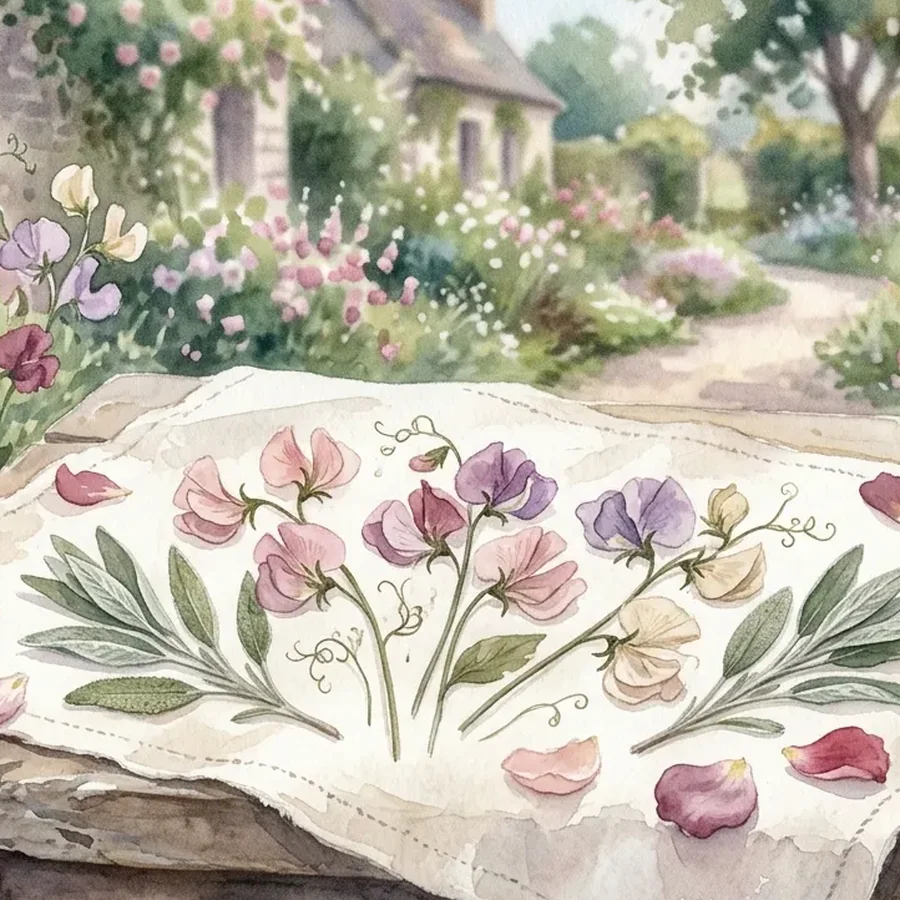
Most design writing shows the finished thing and calls it a case study. This is the other half — how a wedding suite is actually made here, from the moment a briefing arrives to the moment nine print-ready pieces are handed over. The commission is Lily & James Whitfield's, at Contigo Ranch in Fredericksburg, for 165 guests: a Full suite, nine designs, ivory and gold. Everything below is process. Nothing here describes the wedding day itself, because the wedding day is theirs and not ours to narrate.
A commission does not begin with a mood board or a Pinterest link. It begins with a form the client fills in after booking, and the useful parts of it are rarely the ones people expect.
Names, date and venue are the easy half. The half that determines the design is the other one: what the venue actually looks like, what feeling the couple wants guests to have, what they would be embarrassed by, which names must be spelled exactly right, and — the single most valuable field on the form — what to avoid. A client who writes no pressed flowers, no watercolour, no monogram in a wreath has done more to shape the work than one who writes romantic and elegant, because a negative is specific and an adjective is not.
Where a venue is a working landscape rather than a ballroom, that goes in too. A ranch is not a neutral container: it has its own colour and its own texture, and paper that ignores it arrives looking like it was designed for somewhere else.
Within 48 hours the client is shown two complete moodboard worlds. Not two variations — two genuinely different convictions about what this wedding could be, each carried all the way through: palette, typography in real use, materials and print treatment, motif, photographic direction, and how the world translates onto the invitation, the table and the room.
The reason for two rather than one is practical. A single proposal invites editing, and a coherent design edited clause by clause stops being coherent — every individual note is reasonable and the sum is mush. Two finished worlds change the question from what would you change? to which of these is your wedding? That is a question a client can answer with confidence, and the answer is worth more than a hundred small corrections.
The client picks one. The other is kept, not deleted; it is a record of a road not taken, and more than one has come back later for a different event.
Once a direction is approved, the invitation is designed before any other piece — and it is designed several times over, as a set of competing executions inside the approved world, each arguing a different thesis about layout and hierarchy. One is chosen and locked.
That lock is the hinge of the whole commission. The invitation answers the questions every other piece will inherit: where the type sits on the page, how much air is under it, what the size relationship between the two most important lines is, where a motif appears and at what scale, what the material feels like. After that, no piece in the suite is designed from scratch — each is a translation of those answers into a different format and a different job.
This is what stops a nine-piece suite looking like nine separate decisions. The argument for it in general terms is here; this commission is that argument with the receipts.
The Whitfield suite is a Full plan — nine designs. What is interesting is how few of them are the invitation's job:
Six of the nine are read at the venue rather than at home. That ratio is the practical reason the back half of a suite deserves as much attention as the invitation, and it is why the house designs the suite as one system rather than selling an invitation with accessories.
Delivered artwork is not the end of the work; it is the point at which the design meets 165 actual people. Place cards need confirmed spellings, not the spellings on the original list. The seating chart needs the replies to have settled. A bilingual guest list needs each household's own copy in its own language.
That handover is the part most stationery processes leave to a spreadsheet and a long evening. It is also where errors are most expensive, because a misspelled name on a place card is the one design mistake a guest takes personally.
It is not fast in the way a template is fast — the two worlds take 48 hours and the suite follows over the days after the direction is chosen. It is not infinitely revisable: changes run in rounds, batched across the suite, precisely so the coherence that took a locked invitation to establish is not unpicked one note at a time.
And it is not a style the house imposes. Two clients who arrive with the same occasion, the same guest count and the same budget do not get the same suite, because the briefing that produced each one asked what they wanted to avoid — and no two people are embarrassed by the same things.
You can see the finished commission, both the approved moodboard and every delivered piece, in the Showroom.
A briefing goes in; two complete moodboard worlds come back within 48 hours. The client picks one. Every piece in the suite is then drawn inside that approved world — the invitation first, because it fixes the layout, hierarchy and material language everything else inherits.
Because a single proposal invites line-by-line editing, and a design edited by committee loses the thing that made it coherent. Two complete, genuinely different worlds turn the conversation into a choice between two convictions rather than a negotiation over one.
Nine in the Full plan — in this commission: invitation, RSVP card, menu, place cards, table numbers, seating chart, order of service, rehearsal dinner card and a bar menu. The house catalogue runs to more than thirty pieces; plans range from three to sixteen designs.
Every commission starts the same way: a briefing, then two complete directions to choose between. Nothing is drawn until you have picked one.
Start a wedding suite See this commission
The manifesto: events designed like brands, one system across every touchpoint.

Every piece a wedding can carry, when to order it, and what to skip.
One event style fully decoded — palette to postage. The first in the series.