The Long Table
Nothing is illustrated. The invitation is the plan of a room, held on the table's own proportion — and its colours are the house's, not Christmas's: the green Rhys mixed for those walls and never repainted, the oak of the table, the red off a Kinsale door. Abundance is counted rather than drawn.
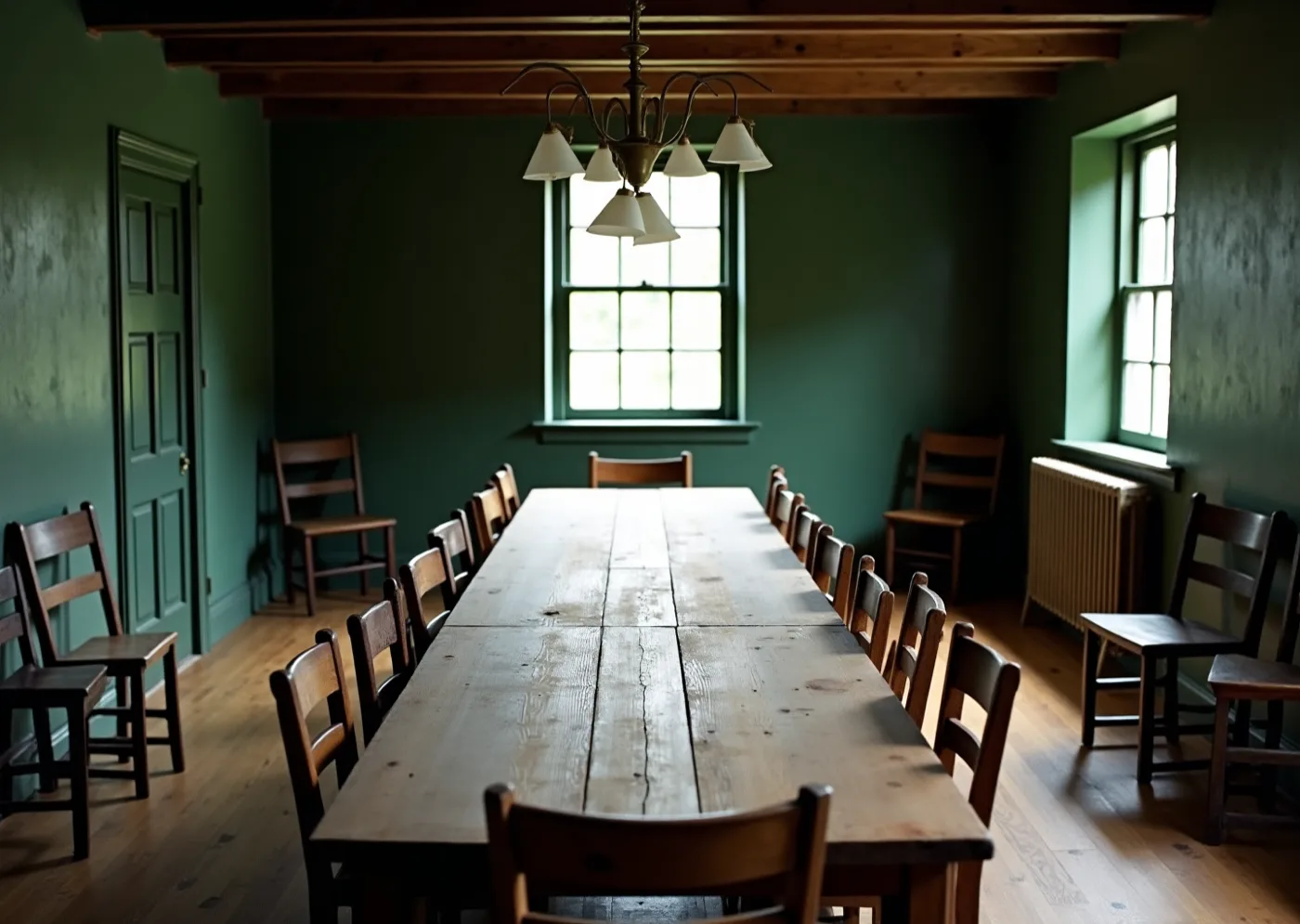
Clodagh's parents bought Ardmore in 1981; Rhys came in 2005 to quote for the roof and stayed. The first Christmas Eve dinner was 2007, for nine, because her mother had died in the October and nobody could face doing nothing. It has run every year since — including the year the road was closed and six people walked in. This world takes its cue from Evorrah rather than from Christmas: the refectory table that seats thirty-eight with both ends put in, the low ceiling, the grey light off the one window. It hands the family a document, not a card.
- Whether the count reads as abundance or as inventory. You asked that if it errs, it err towards too much, and this world gets there by counting rather than drawing — thirty-eight, nineteen, eleven, five, two, all set as words. A page of numbers can read as a full house or as a manifest, and that will not be settled until it is set at size.
- Whether the cut list gets filled in on the day. It only works if somebody writes that year's species onto the sheet on the morning of the twenty-fourth. The printing has to leave room for it without looking unfinished if nobody does, and nobody has yet said who holds the pen.
- Whether three colours is still one ink. The argument for this world was economy — one pass, every mark earning itself. Green, red and oak is three passes, and the moment it is three the restraint has to come from how little of each is used rather than from how few there are.
- Whether a Kinsale red reads as the town or just as red. It is off a door on the street and it is meant to say here, not Christmas. On a card in December, next to greenery, a red may not get to choose which one it is.